A configuration framework for Rust with schema validation, sample generation, and documentation support.
The Reason
Config management in Rust was traditionally verbose: you define custom structs, parse files with Serde, and manually validate every field. I wanted a tool that makes defining, validating, and documenting config schemas ergonomic without sacrificing performance or type safety — especially for CLI tools, servers, and backend services. Profig was my attempt to explore procedural macros and metadata-driven design in Rust.
What It Does
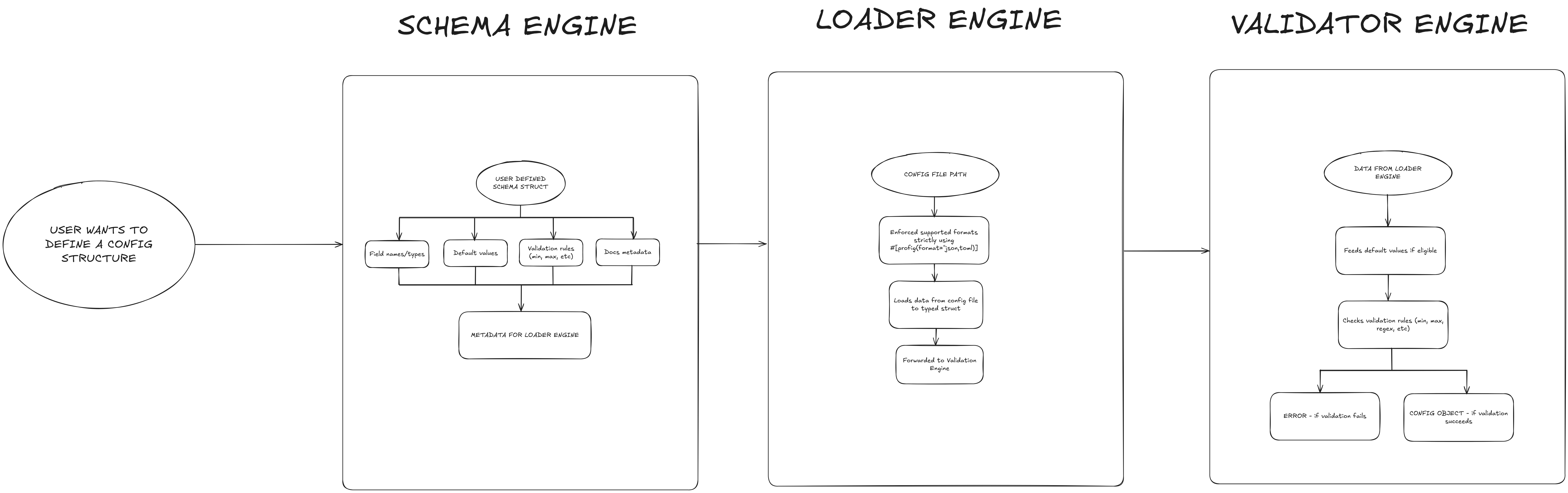
Profig lets you define configuration schemas using #[derive(Profig)] and enrich fields with metadata like validation rules, defaults, and documentation. It can:
- Load config from TOML, JSON, or YAML automatically based on file extension
- Validate values against constraints like maximum and minimum
- Generate sample config files using schema
- Produce documentation from the metadata in the struct definition
Technical Design
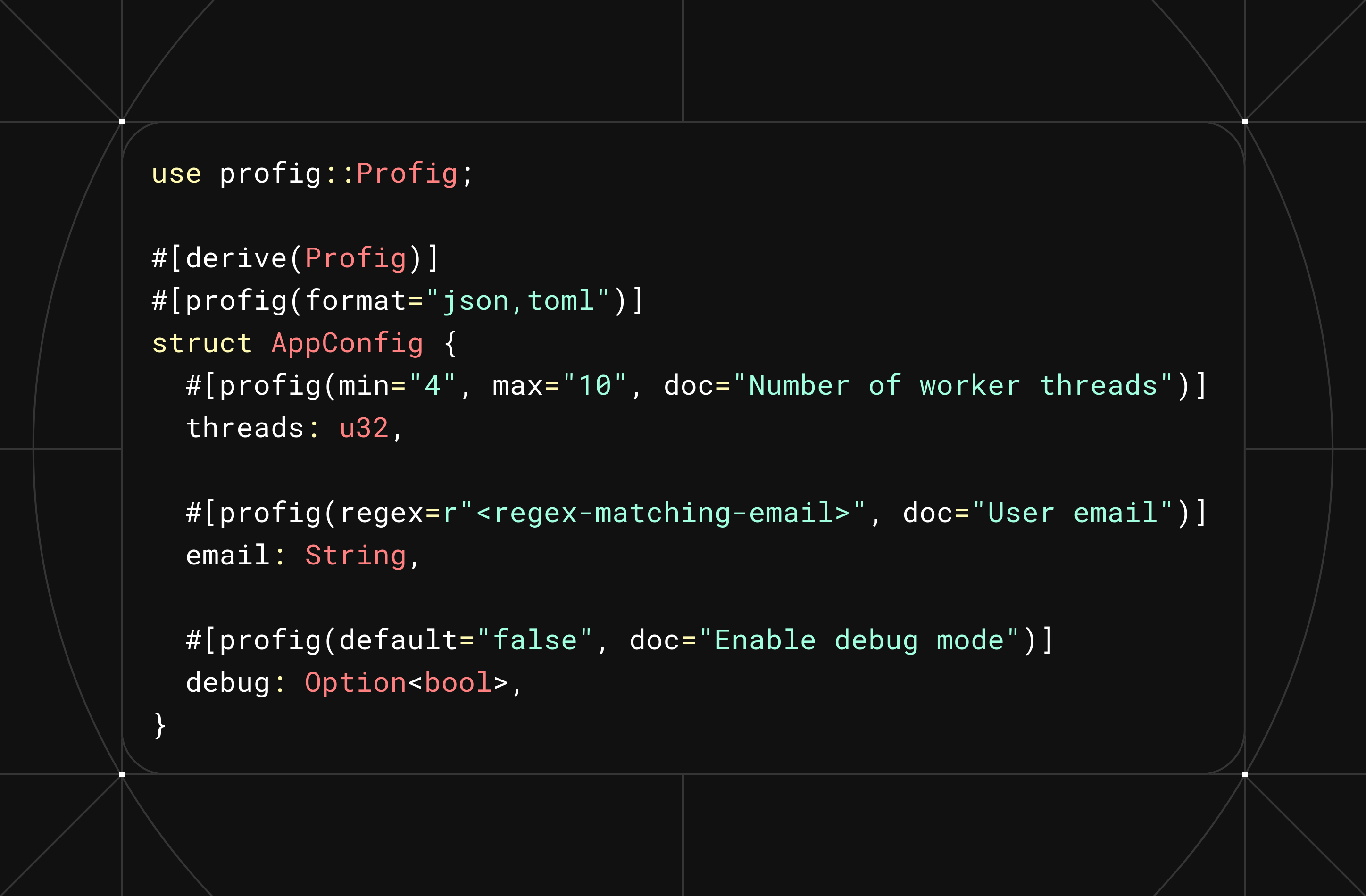
Here's a minimal example of how a config struct is defined:
use profig::Profig;

#[derive(Profig)]
#[profig(format="toml, json")]
struct AppConfig {
    #[profig(min="4", max="10", doc="Number of worker threads")]
    threads: usize,

    #[profig(doc="Path to output directory")]
    output_dir: String,

    #[profig(default="false", doc="Enable debug mode")]
    debug: Option<bool>,
}
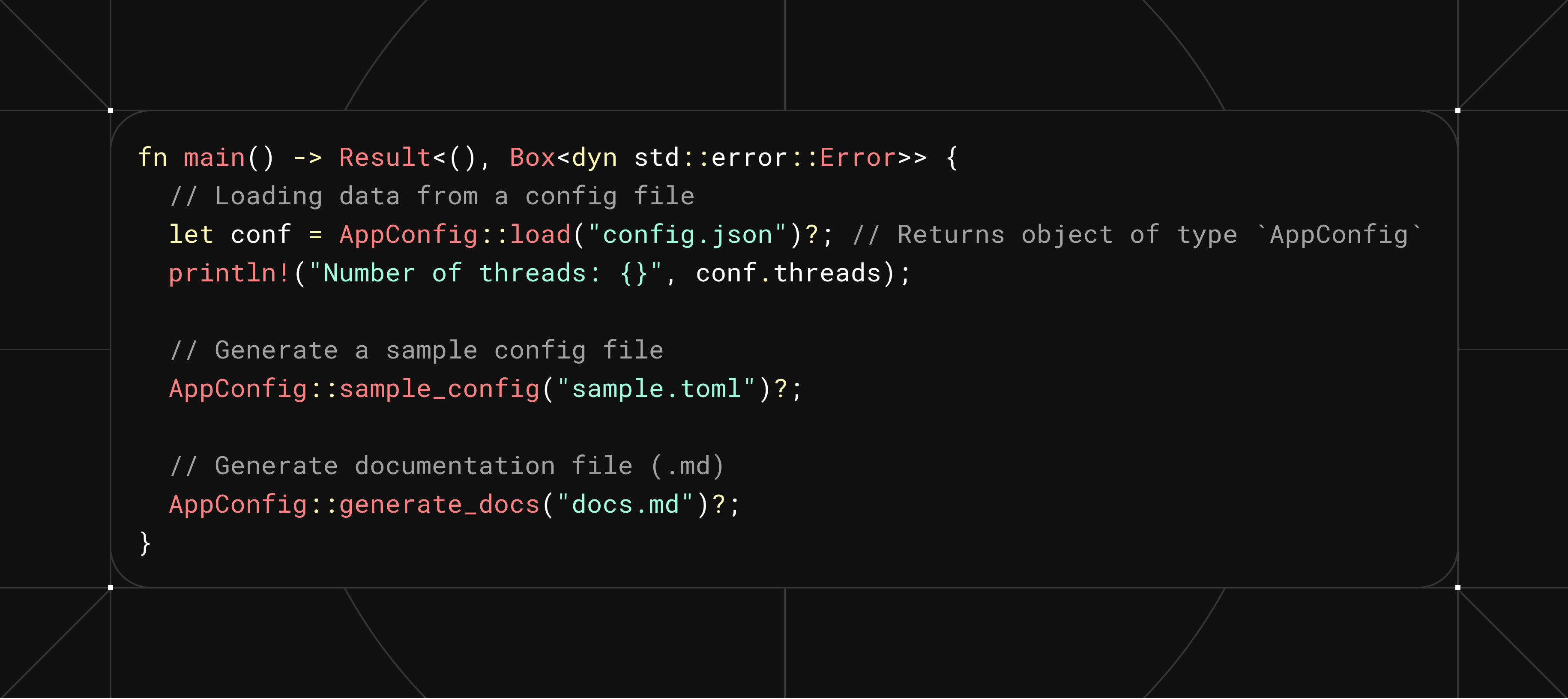
Then loading is as simple as:
let config = AppConfig::load("config.toml")?;
println!("Threads: {}", config.threads);
This design leverages Rust's procedural macros to automatically generate parsing, validation, and documentation logic from the struct definition.
Challenges
- Exploring procedural macros beefed up my understanding of compile-time code generation.
- Balancing ergonomic API design with strict validation rules was an interesting trade-off.
- Building support for multiple formats (TOML/JSON/YAML) clarified how feature flags can shape flexible dependency graphs.
Usage
Profig is published on crates.io and can be added to your project using:
cargo add profig --features "toml,json,yaml"
Links
Images